
What's Your Plan?
Alternatives to purchasing servers and workstations from tier 1 providers
Andy Warman and Rich Narain
7/6/20264 min read
What’s Your Plan?
Alternatives to Purchasing Tier 1 OEM Servers
The latest news from vendors such as Dell and HPE is yet another hit to media and entertainment industry vendors reselling OEM workstations and server systems as part of their solutions. If you have not already done so, now might be the time to plan for alternate sources for your PC needs.
Availability of memory is the main cause cited for continued supply chain volatility. Dell, for their part, is prioritizing large strategic customers, while HPE is leveraging long-term agreements with memory providers to lock in supply. This is, of course, in response to the demand for memory in its various forms used by AI data centers.
It is important to keep in mind that memory is only a part of the current crisis. Everything is impacted on some level – from the chassis to silicon and boards. Lead times and pricing for components and PCBs have been steadily increasing due to demand and geopolitical issues. Semiconductor pricing has increased several times in 2026, in part due to the high demand for high-speed PCBs to support 100G-plus networking, which requires special raw materials and more complex manufacturing processes. As a result, lead times have increased as factories prioritized high-speed PCBs for AI and data center needs.
Where price makes the difference between making a sale or delaying or cancelling projects, the general upward trend in cost and inability to guarantee pricing for as little as a week creates ongoing uncertainty for resellers and buyers alike. You could absorb the deltas or pass the costs on to customers. Or you could look at other ways to address business needs.
Understanding your buying power
Smaller companies are already at a disadvantage, being subject to lower discount levels than larger organizations and being reprioritized in favor of larger volumes and negotiated purchase agreements. While you may accept lower margins or you can make up the difference in software and services, you are also subject to growing lead times. The result is the need to pre-purchase and hold inventory you may later struggle to shift, or risk unwanted or unacceptable delays once you do receive an order. Your buying power is restricted; not just as a function of the price you pay, but the ability to get what you need when you need it.
If the larger OEMs are making your business hard to operate, there are several paths forward.
Alternate Providers
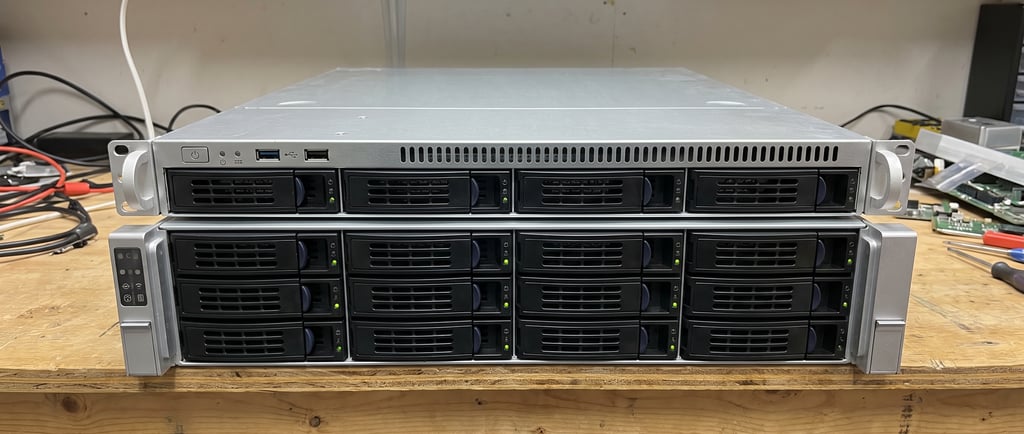
Many smaller server providers can build servers and workstations to specifications that will fulfill the same roles as systems from Dell, HPE, etc offer. They are subject to supply chain restrictions, pricing and related issues, but can often work with smaller organizations in more creative ways. At the recent InfoComm 2026 show, some vendors discussed building their own servers or partnering with ODM vendors to try and stabilize the supply line. For industries that do not require the latest hardware, this is a viable option, as not all ODM server partners are focusing on data centers.
There may be tradeoffs such as global parts supply and preferences for remote management. This is often offset by greater customization, build-to-order, specialty parts integration, stocking options, and in some cases extended lifecycles beyond what major suppliers are willing to offer.
Alternate Platforms
In some cases, alternate platforms and compute can be used. The obvious go-to is ARM-based systems. ARM is no longer just for mobile devices. Yes, you can use it in mini PC form factor hardware where it makes sense. At the other end of the scale, vendors like Ampere are enabling x86 capabilities in line with Xeon and EPYC performance with dramatic energy savings. At InfoComm, we saw several scenarios already unfolding, including:
The use of ARM and Android OS in place of x86 processor to run OEM audio solutions. The benefits cited included lower cost and improved availability. The security issues with Android OS were addressed by working with a large operating system company to have their version certified.
One OEM is actively exploring designing its own server using ARM processors to bolster its product lines.
Several vendors have designed their own system leveraging FPGA and ARM processors, which they displayed as “no PC needed.
In the past, leveraging COTS compute solutions was the best option for most of the computing needs when supply and multiple configurations were available. Today, enterprise companies focus on AI/data center business, driven by their customers signing up to multi-year supply commitments. The focus has shifted to producing multi-socket processor solutions capable of hosting multiple GPUs in the most efficient form factor – usually 2 to 4RU with rack depth beyond 28 inches, common in data center systems. Manufacturers are being forced to adapt or risk limiting the market they can serve.
Buying Groups
If you want more buying power, buying groups represent a way to relieve some of the tension. From a purchasing perspective, the idea is simple – vendors with similar needs join together to buy collectively from suppliers and in the process command higher discounts, have more predictable overall demand, and therefore get better terms and lead times.
We are here to help
OXI Media’s extensive supply chain expertise enables you to be more efficient, cost-effective and gain access to hardware and systems that are otherwise difficult to acquire. Reach out to our supply chain expert, Rich Narain, at rnarain@oximedia.net or visit us at www.OXIMedia.net
References & sources:
Supply Chain Dive: Dell, HPE server supply upended by memory crunch https://www.supplychaindive.com/news/dell-hpe-server-supply-upended-by-memory-crunch/822273/
HyperPC: Server processors 2025: a comparison of AMD EPYC, Intel Xeon, and ARM solutions for data centers and pro workstations.
Contact
Reach out on social media, email, or by phone
© 2026. All rights reserved.